Gifts for Astronomy Lovers
The best big gift for an astronomy lover is an 8 inch Dobsonian such as the Sky-Watcher Classic 200 at around $725, and the best gift under $50 is a Celestron Omni 32 mm Plossl eyepiece, which gives almost any telescope the wide, low-power view its bundled eyepieces cannot.
Astronomy gift ideas split cleanly into two kinds: the one big instrument that decides what a person can see for the next decade, and the accessories that make every session with it better. This guide leads with the big gift, because aperture decides what a telescope can show, then works down through serious upgrades, gear under $100, gear under $50 and stocking stuffers. All 25 picks are verified Amazon listings, and every one comes with what it replaces and what to check before you buy.
As an Amazon Associate we earn from qualifying purchases. How this site is funded.
What makes a good astronomy gift?
Two facts sit under every recommendation on this site, and they matter twice as much when you are buying for someone else. First, the mount matters more than the telescope. A department-store telescope on a wobbly tripod is the single most common reason a beginner gives up, because a shaking image at 150x is unusable no matter what the optics could do. Second, a telescope will not show the colours in a photograph. Night vision is nearly monochrome, so nebulae look like grey mist and galaxies like faint smudges. What does look spectacular to the eye is the Moon, Saturn, Jupiter and its four moons, the Pleiades, and globular clusters through 8 inches or more.
A good gift respects both facts. It stands still, it has real aperture, and the person giving it says out loud what it will and will not show. Our what you can see with a telescope guide is worth reading before you choose, and the telescope size calculator turns a target ("I want to see Saturn's rings" or "I want galaxies") into a minimum aperture.
The big gift: telescopes worth giving
Everything in this tier is an instrument someone keeps. The choice comes down to three questions: does the recipient want to look or to photograph, do they have room for a 4 foot Dobsonian, and do they want the telescope to find things for them. The table sorts it; the cards explain each one.
| Telescope | Aperture | Finds targets? | Give it to |
|---|---|---|---|
| Celestron NexStar 8SE | 203 mm | Yes, GoTo | Planets, small storage space |
| Celestron NexStar Evolution 8 inch | 203 mm | Yes, GoTo + WiFi | Same, observed off-grid |
| Celestron StarSense Explorer 8 inch Dobsonian | 203 mm | Phone guided | Deep sky, cannot star hop yet |
| Sky-Watcher Classic 200 Dobsonian 8 inch | 203 mm | No | Deep sky, willing to learn the sky |
| ZWO Seestar S30 Pro Smart Telescope | 30 mm | Yes, automatic | Wants colour photos, not eyepiece views |
| Sky-Watcher Evostar 80EDX APO Doublet Refractor | 80 mm | Needs a mount | Already owns a camera and tracking mount |
The Sky-Watcher Classic 200 Dobsonian 8 inch is the default answer because an 8 inch mirror gathers 2.4 times the light of a 130 mm and roughly 840 times the light of a dark-adapted eye, which is where globular clusters resolve into stars and the Cassini division becomes routine. It is manual, so the recipient learns the sky, and it is 4 feet tall, so check they have a closet or a garage corner. If they will not learn the sky, the Celestron StarSense Explorer 8 inch Dobsonian adds a phone dock that plate-solves the star field and points them at targets, which our Dobsonian roundup argues is worth the extra $150 for most first-time 8 inch owners.
The Celestron NexStar 8SE is the right big gift when storage is the constraint: a Schmidt-Cassegrain folds a 2,032 mm focal length into a 17 inch tube, and the GoTo fork tracks objects so they stay in the eyepiece at high power, which is exactly what planetary viewing needs. It requires 30 to 45 minutes of cool-down before it performs, and it runs on batteries or a power tank. Read the full 8SE review before choosing between it and the Dobsonian; they show similar things by different routes.
The ZWO Seestar S30 Pro Smart Telescope is a different gift entirely. It has no eyepiece. It sits on a small tripod, aligns itself, and stacks exposures into a colour image of a nebula on a phone screen in ten minutes. Give it to the person who has always wanted the photograph rather than the faint grey view, or to someone in a badly light-polluted city, where its live stacking beats an eyepiece by a wide margin. The Seestar S30 Pro review covers its limits, which are planets and anything needing high magnification.
The big gift

Celestron NexStar 8SE
An 8 inch Schmidt-Cassegrain that folds 2,032 mm of focal length into a tube one person carries, on a GoTo fork that finds and tracks 40,000 objects. It is the telescope people keep for twenty years, and the one to give when the recipient wants planets and has nowhere to store a 4 foot Dobsonian.
Best for: Planetary detail from a small storage space
Check price
Celestron NexStar Evolution 8 inch
The 8SE optics on a heavier fork with a built-in lithium battery and WiFi control. The steadier mount is most of the extra cost, and steadiness is what a telescope sells or fails on.
Best for: An 8 inch SCT owner-to-be who observes away from mains power
Check price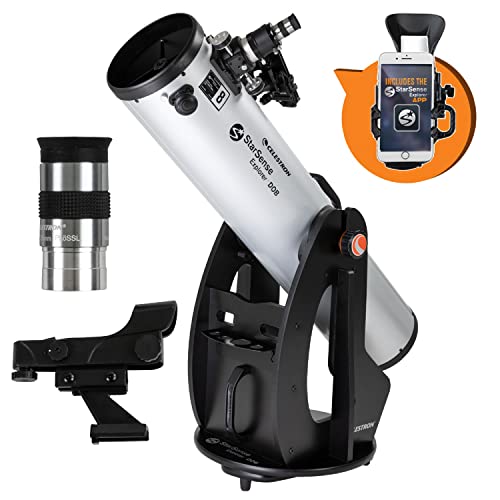
Celestron StarSense Explorer 8 inch Dobsonian
The 8 inch Dobsonian with a phone dock that plate-solves the sky and walks the user onto a galaxy with on-screen arrows. Roughly $150 over the plain Classic 200 buys the first-night success that keeps beginners in the hobby.
Best for: An 8 inch buyer who does not want to learn the sky first
Check price
Sky-Watcher Classic 200 Dobsonian 8 inch
The reference 8 inch Dobsonian: most aperture per dollar of anything on this page. No batteries, no alignment, nothing to go wrong, and enough light grasp to show the Cassini division on a mediocre night.
Best for: A visual observer who has somewhere to store a 40 lb tube
Check price
ZWO Seestar S30 Pro Smart Telescope
A smart telescope that lives on a phone: it aligns itself, stacks exposures and produces a colour image of a nebula in ten minutes from a suburban garden. It will not give an eyepiece view, and it is the right gift for the person who wants photographs rather than photons.
Best for: Someone who wants pictures of nebulae, not grey smudges in an eyepiece
Check price
Sky-Watcher Evostar 80EDX APO Doublet Refractor
An 80 mm ED doublet is the standard first serious imaging telescope: short, light, forgiving of mount error and free of the collimation duty a Newtonian brings. Give it to someone who already owns a camera and a tracking mount.
Best for: A first dedicated deep sky imaging tube
Check pricePrices change often, confirm on Amazon. As an Amazon Associate we earn from qualifying purchases.
Serious upgrades: astronomy gift ideas for adults, $250 to $600
This tier is where the best gifts for someone who already owns a telescope live, and where the safest first telescope lives too. If the recipient has a decent tube on a bad tripod, a real mount is the upgrade that changes everything: the Sky-Watcher AZ-GTi Computerized Alt-Az Mount carries an 11 lb tube, finds targets from a phone, and tracks them. If they have been photographing the Milky Way with a camera on a tripod, the Sky-Watcher Star Adventurer GTi Mount Head Kit is a genuine equatorial GoTo head rated for imaging payloads, and our how to start astrophotography guide is built around exactly this purchase. Run their telescope's weight through the mount payload calculator before buying either; a mount loaded past about two thirds of its rating for imaging shakes.
| Gift | Type | Replaces | Give it to |
|---|---|---|---|
| Sky-Watcher Star Adventurer GTi Mount Head Kit | GoTo equatorial mount | A camera on a fixed tripod | The DSLR owner who wants nebulae |
| Sky-Watcher AZ-GTi Computerized Alt-Az Mount | GoTo alt-az mount | A wobbly bundled tripod | A good tube on a bad mount |
| Celestron StarSense Explorer DX 130AZ | 130 mm reflector, phone guided | Nothing, first telescope | A suburban beginner |
| Sky-Watcher Heritage 150P Tabletop Dobsonian | 150 mm tabletop Dobsonian | Nothing, first telescope | A beginner with a table and dark-ish skies |
| Sky-Watcher Heritage 130mm Tabletop Dobsonian | 130 mm tabletop Dobsonian | Nothing, first telescope | The safest first telescope for anyone |
| Starbound Adjustable Astronomy Observing Chair | Adjustable chair | Stooping, a kitchen stool | Any Dobsonian owner |
For a first telescope, the Sky-Watcher Heritage 130mm Tabletop Dobsonian is what this site recommends to every beginner, and the reasoning is in best telescope for beginners: it is the only mount under $350 that does not wobble, and 130 mm is the smallest aperture that shows the Cassini division. The Sky-Watcher Heritage 150P Tabletop Dobsonian is the same idea with a third more light. The Celestron StarSense Explorer DX 130AZ trades the tabletop base for a tripod and adds phone-guided pointing, which matters most under bright suburban skies where a beginner cannot see enough stars to star hop.
The Starbound Adjustable Astronomy Observing Chair looks like an odd gift until you have watched someone spend an hour bent over a Dobsonian eyepiece. Owners report seeing more detail simply because a relaxed eye holds focus longer. It is the accessory experienced observers wish they had bought first, and nobody buys for themselves.
Serious upgrades

Sky-Watcher Star Adventurer GTi Mount Head Kit
A full GoTo equatorial mount head rated for 11 lb of imaging payload, which is enough for an 80 mm refractor and a camera. This is the purchase that turns a DSLR owner into an astrophotographer.
Best for: The person who already has a camera and keeps talking about the Milky Way
Check price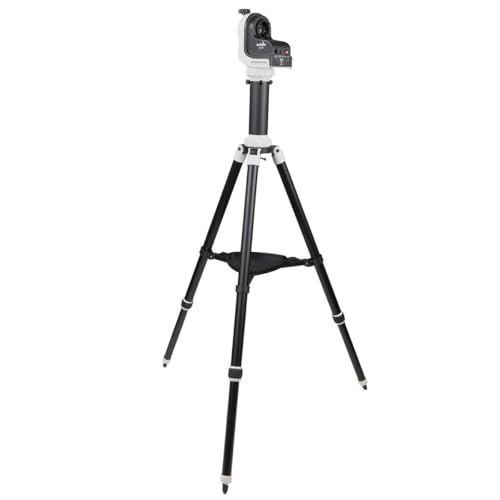
Sky-Watcher AZ-GTi Computerized Alt-Az Mount
A phone-controlled GoTo alt-azimuth mount that carries an 11 lb tube. Give it to someone with a good telescope on a bad tripod, which describes most first-year owners.
Best for: Upgrading a wobbly bundled mount
Check price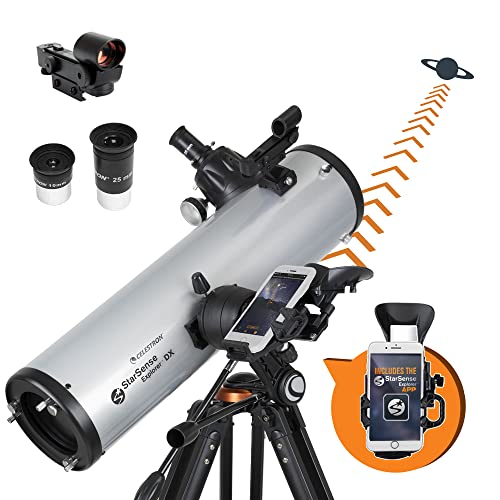
Celestron StarSense Explorer DX 130AZ
A 130 mm f/5 reflector on a full tripod, with a phone dock that plate-solves the sky and points the user at targets. Nothing motorised, so no batteries and no alignment, but it removes the single thing that makes beginners quit: not being able to find anything.
Best for: A beginner in a light-polluted suburb
Check price
Sky-Watcher Heritage 150P Tabletop Dobsonian
The 150 mm version of the most recommended first telescope. A third more light than the 130 mm, still collapsible, still carried outside in one trip, still on the only mount type under $400 that does not shake.
Best for: A first telescope with a little more reach
Check price
Sky-Watcher Heritage 130mm Tabletop Dobsonian
The first telescope most people should be given. A 130 mm mirror on a tabletop Dobsonian base, collapsible to carry-on size, and the smallest aperture that shows the Cassini division and real structure in the Orion Nebula.
Best for: An adult or teenager receiving their first real telescope
Check price
Starbound Adjustable Astronomy Observing Chair
An adjustable-height chair that puts the eye at the eyepiece without stooping. Owners consistently report longer sessions and more detail seen simply from being comfortable. It is the upgrade experienced observers wish they had bought first.
Best for: Anyone who already owns a Dobsonian
Check pricePrices change often, confirm on Amazon. As an Amazon Associate we earn from qualifying purchases.
Astronomy gifts under $100
These four are the gifts for a telescope owner whose box came with the bare minimum, which is nearly all of them. The Celestron SkyMaster 15x70 Astronomy Binoculars deserve a special mention: 15x70 binoculars show the whole Pleiades, the Andromeda Galaxy as an oval glow, and Jupiter's moons, and they are the instrument every telescope owner ends up wanting for wide fields. Our astronomy binoculars roundup explains why 70 mm is the size to buy and why anything above 15x needs a tripod.
| Gift | What it does | Give it to |
|---|---|---|
| Celestron SkyMaster 15x70 Astronomy Binoculars | Wide-field views, no setup | A beginner, or any telescope owner |
| HODRANT Large Padded Telescope Carrying Case | Padded transport and storage | A telescope that travels in a blanket |
| Pocket Sky Atlas | Charts at finder scale | Someone learning to star hop |
| Celestron NexYZ 3-Axis Smartphone Adapter | Phone photos through the eyepiece | Someone who wants to share the view |
Under $100

Celestron SkyMaster 15x70 Astronomy Binoculars
Fifteen power, 70 mm objectives, and a field wide enough to hold the whole Pleiades. Binoculars are the honest first instrument for someone who has never used a telescope, and the second instrument every telescope owner ends up wanting.
Best for: A beginner, or a telescope owner with no wide-field option
Check price
HODRANT Large Padded Telescope Carrying Case
A padded case sized for the common 5 inch and 6 inch tubes and their tripods. Telescopes that have a case get used more, because packing them stops being a chore.
Best for: A telescope that currently travels in a blanket
Check price
Pocket Sky Atlas
Eighty charts, spiral bound, showing 30,000 stars and 1,500 deep sky objects at a scale that matches a finder view. It is the atlas people actually take outside.
Best for: Anyone learning to star hop
Check price
Celestron NexYZ 3-Axis Smartphone Adapter
A three-axis clamp that holds a phone camera over the eyepiece and, crucially, lets it be adjusted while looking at the screen. The Moon through any telescope becomes a shareable photo the same night.
Best for: The recipient who will want to show people what they saw
Check pricePrices change often, confirm on Amazon. As an Amazon Associate we earn from qualifying purchases.
Astronomy gifts under $50
The best gift under $50 for almost any telescope owner is a low-power, wide-field eyepiece, because bundled telescopes ship with a 25 mm and a 10 mm and nothing wider. The Celestron Omni 32mm Plossl Eyepiece gives the widest field a 1.25 inch focuser can show and turns finding objects from a chore into a sweep. Check the recipient's telescope focal ratio first: in a fast f/5 reflector a 32 mm eyepiece produces a 6.4 mm exit pupil, right at the limit of what a dark-adapted eye can use, which the eyepiece calculator will confirm in a few seconds. The full reasoning on planning a set is in best telescope eyepieces, and our separate astronomy gifts under $50 guide has fifteen more picks at this price.
| Gift | What it does | Check first |
|---|---|---|
| Celestron Omni 32mm Plossl Eyepiece | Widest low-power view | Telescope focal ratio f/5 or slower |
| SVBONY SV135 7mm to 21mm Zoom Eyepiece | 21 mm to 7 mm in one eyepiece | 1.25 inch focuser |
| Celestron Variable Moon Filter | Dims a bright Moon | Threads into 1.25 inch eyepieces |
| Turn Left At Orion | Shows what objects really look like | Nothing, it fits every telescope |
Under $50

Celestron Omni 32mm Plossl Eyepiece
A 32 mm Plossl gives the lowest useful power and widest field most 1.25 inch telescopes can reach. It is the eyepiece for finding things, sweeping the Milky Way and open clusters.
Best for: A telescope owner with only the bundled 25 mm and 10 mm
Check price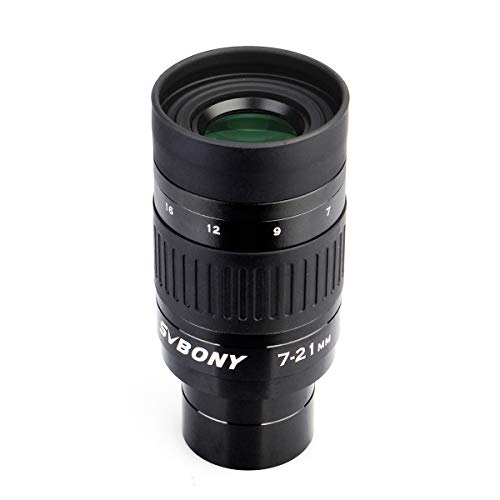
SVBONY SV135 7mm to 21mm Zoom Eyepiece
One eyepiece that runs from 21 mm to 7 mm, so a beginner can dial in magnification without fumbling in the dark. Sharper fixed eyepieces exist, but none is this convenient at this price.
Best for: A beginner who finds eyepiece swapping fiddly
Check price
Celestron Variable Moon Filter
A variable-density polarising filter that dims the Moon from painful to comfortable and back, so crater shadows stop washing out. Every telescope owner who looks at the Moon wants one.
Best for: Anyone whose telescope mostly points at the Moon
Check price
Turn Left At Orion
The book that shows what an object actually looks like in a small telescope, drawn from the eyepiece rather than photographed. It manages expectations better than anything else in print.
Best for: Every first-year telescope owner
Check pricePrices change often, confirm on Amazon. As an Amazon Associate we earn from qualifying purchases.
Stocking stuffers for stargazers
Small, useful, and impossible to get wrong. A Celestron Night Vision Red LED Headlamp is the most-used object at any observing session, because red light preserves the 20 to 30 minutes of dark adaptation a phone screen destroys in a second. A The Night Sky Planisphere, 30 to 40 Degrees North teaches the sky without a screen at all. The Celestron EclipSmart Universal Full-Aperture Solar Filter is the one that turns a night hobby into a day one: a certified full-aperture solar filter fitted over the front of the telescope makes sunspots safe to observe, and it is the only safe way to point any telescope at the Sun. Read how to observe the Sun safely before giving it, and never give an eyepiece-end sun filter to anyone.
Stocking stuffers

The Night Sky Planisphere, 30 to 40 Degrees North
A rotating star chart that shows exactly which constellations are up on any date and hour. No battery, no app, no light pollution from a screen.
Best for: Learning the sky without a phone
Check price
Celestron Night Vision Red LED Headlamp
Red light preserves dark adaptation, and a headlamp keeps both hands free for eyepieces. The single most-used accessory at any observing session.
Best for: Anyone who has ever ruined their night vision with a phone
Check price
Celestron EclipSmart Universal Full-Aperture Solar Filter
A certified full-aperture solar filter that fits over the front of a small telescope and makes sunspots safe to observe. It is the only safe way to point a telescope at the Sun, and it turns a night hobby into a day one.
Best for: A daytime use for a telescope, safely
Check price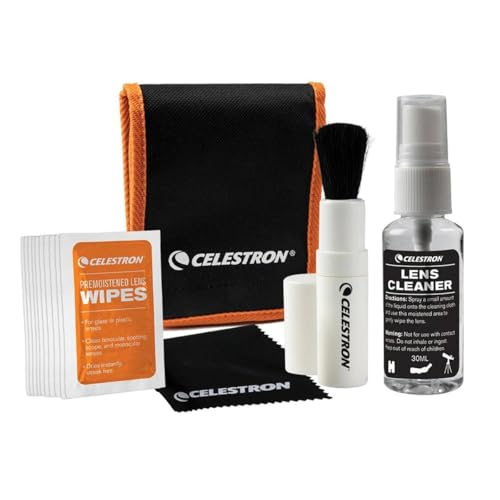
Celestron Lens Cleaning Kit
A brush, a blower, lens fluid and lint-free tissue in one pouch. Optics get cleaned far less often than beginners think, so a kit like this lasts years and stops the temptation to use a shirt sleeve.
Check price
Celestron LensPen Optics Cleaning Tool
A retractable brush on one end and a carbon cleaning tip on the other, sized for eyepieces and finder lenses. It lives in the eyepiece case and gets used every session.
Check pricePrices change often, confirm on Amazon. As an Amazon Associate we earn from qualifying purchases.
Astronomy gifts for kids and teens
The demand data behind this page is full of "telescope gift for kids" and "astronomy gifts for 10 year olds", and the honest answer depends on age. Under about eight, binoculars or the tabletop Celestron FirstScope Signature Series Moon Tabletop at around $60 are right, because a child that age cannot yet aim a telescope alone and the FirstScope genuinely shows lunar craters and Jupiter's moons. From about ten up, buy the same telescope you would buy an adult: the Sky-Watcher Heritage 130mm Tabletop Dobsonian is the most-given telescope for a reason. A teenager with a phone and an interest in photography is the ideal recipient for the ZWO Seestar S30 Pro Smart Telescope . The full breakdown by age is in best telescope for kids.
What to check before you buy any of these
- Mount type. Dobsonian base, GoTo fork, or a tripod with a real mount head. A lightweight photo tripod under a telescope is the gift that gets returned.
- Aperture in millimetres, not magnification. A telescope sold on "500x" is hiding its aperture. Maximum useful magnification is about 2x per millimetre, and the atmosphere caps most nights at 200x to 250x regardless.
- Storage and weight. An 8 inch Dobsonian is about 4 feet tall and 40 lb. A tabletop Dobsonian fits in a closet. A Schmidt-Cassegrain fits in a car boot assembled.
- Eyepiece size. Almost every telescope on this page takes 1.25 inch eyepieces and filters, so the accessories here fit. Check before buying 2 inch anything.
- Power. GoTo telescopes and smart telescopes need batteries or a power tank. A Dobsonian needs nothing.
If the recipient already has a telescope and you want to match a gift to what they own, the telescope gift guide walks the big decision through the site's calculators, and the beginner telescope setup shows what a complete first kit looks like with a running total.
Frequently asked questions
What is the best gift for someone who loves astronomy?
For a big gift, an 8 inch Dobsonian such as the Sky-Watcher Classic 200 at around $725 is what experienced observers recommend and own, because aperture decides what a telescope can show and a Dobsonian puts the money into the mirror. For someone who already has a telescope, an adjustable observing chair, a good 32 mm eyepiece or a phone adapter each improve every session they will ever have.
Is a telescope a good gift for a beginner?
Yes, if the mount is steady and expectations are set. A 130 mm tabletop Dobsonian around $300 is the safe choice: it does not wobble, needs no batteries, and shows the Moon, Saturn and Jupiter well. Avoid anything sold on its magnification figure. A telescope advertised as 500x on a spindly tripod is the most common reason a new owner gives up in a month.
What astronomy gifts work for someone who already owns a telescope?
Accessories they have not bought themselves: a low-power wide-field eyepiece, a variable Moon filter, a red headlamp, an observing chair, or a padded case. Ask what came in their box. Most bundled telescopes ship with two eyepieces and no finder worth using, so a 32 mm Plossl and a right-angle finder are rarely duplicates.
Will a telescope show the colourful nebulae from photographs?
No, and saying so is the kindest thing a gift-giver can do. Human night vision is nearly monochrome, so the Orion Nebula appears as grey-green mist and galaxies as faint smudges. What does look spectacular to the eye: the Moon at any aperture, Saturn with its rings, Jupiter with its belts and four moons, the Pleiades, and double stars. A smart telescope like the Seestar S30 Pro is the gift for someone who wants the colour photograph instead.
How much should I spend on a telescope gift?
Around $300 buys a telescope that will be used for years, around $700 buys the 8 inch class that many owners never replace, and $1,700 and up buys GoTo tracking and compact optics. Below $200 the mount is usually the compromise, and a shaking image at high power is unusable regardless of what the optics could do. Spend less on aperture and more on steadiness if the budget is tight.
What should I check before buying a telescope as a gift?
Three things: the mount type (a Dobsonian base or a real tripod, not a lightweight photo tripod), the aperture in millimetres (130 mm and up shows real detail), and whether the recipient has somewhere to store and carry it. An 8 inch Dobsonian is about 4 feet tall and 40 lb. If space is tight, a tabletop Dobsonian or a Schmidt-Cassegrain fits in a closet.
How we choose: we compare published manufacturer specifications, optical figures we can verify, and reviews from owners who have used the equipment under real skies. We do not test gear in person. Never point any telescope, finder or binocular at the Sun without a certified full-aperture solar filter fitted over the front of the instrument.
Recording your own eyepieces, exit pupils and sessions? The Observing & Astrophotography Planner is the paid version of these pages: 8 printable worksheets you fill in with your own numbers, plus the full PDF, $29.